The Members
The clubs are made of men. Here are the founders and presidents who built them, the enforcers who fought their wars, the informants who betrayed them, and the undercover agents who rode inside to bring them down.
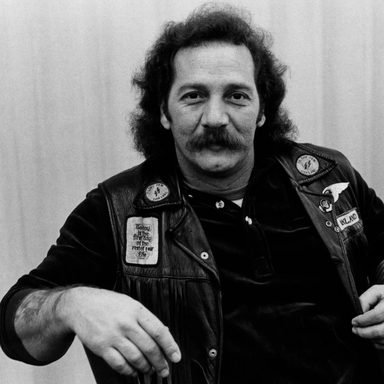
Ralph “Sonny” Barger
The single most famous outlaw biker in history. Barger founded the Oakland Hells Angels charter in 1957 and, by force of personality and organizational instinct, made it the club’s de facto “mother charter.” For five decades he was the Angels’ strategist, spokesman and global ambassador — the man who turned a brawling fraternity into a disciplined institution.
He survived the Altamont fallout, federal racketeering and drug prosecutions, and years in prison, and later reinvented himself as an author and minor celebrity. His memoir Hell’s Angel remains the definitive insider account from the top. Barger died in 2022, the last titan of the founding generation.
Hells AngelsFounderUSA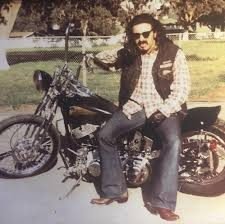
George Christie Jr.
The longest-serving charter president in Hells Angels history and, for decades, the club’s public face and chief negotiator — “the face and voice” to Sonny Barger’s fist. The only child of Greek immigrants and a former Marine reservist, Christie founded the Ventura charter in 1978 and led it for 33 years, taking a calm, media-savvy line as racketeering pressure mounted; he carried the Olympic torch through Oxnard in 1984 and was acquitted in a high-profile murder-solicitation case.
Christie resigned in 2011, saying the club had “become the people we rebelled against,” and was branded “out bad.” He later served time over a tattoo-shop extortion-conspiracy count and told his story in the 2016 memoir Exile on Front Street.
Hells AngelsPresidentAuthorGeorge Wethern
Barger’s right hand and the Oakland charter’s vice-president through its rise, Wethern oversaw the club’s early drug dealing before his life collapsed into addiction and paranoia. He ultimately turned government witness against the club he helped build. His memoir A Wayward Angel is one of the earliest insider exposés of the Angels’ inner workings, written by a man who once made the money decisions for the most powerful charter in the club.
Hells AngelsInformantAuthorMaurice “Mom” Boucher
The most feared outlaw in Canadian history. Boucher rose through Quebec’s Hells Angels to lead the elite Nomads chapter, and in 1994 launched a war on the Rock Machine for control of Montreal’s drug trade. Ruthless and openly contemptuous of the state, he ordered the murders of prison guards in 1997 in a bid to terrorize the justice system.
That gambit destroyed him. Convicted of first-degree murder in 2002 — largely on the testimony of insiders he had trusted — Boucher spent the rest of his life in maximum security, where he died in 2022. The war he started killed more than 150 people, including bystanders and a child.
Hells AngelsQuebec warCanadaWalter “Nurget” Stadnick
A small, badly burned man from Hamilton, Ontario, Stadnick was the strategic brain behind the Hells Angels’ conquest of Canada. Where others fought, he negotiated and recruited, patiently knitting independent clubs into the Angels’ national structure through the 1980s and ’90s. Largely unknown to the public, he was, to investigators, one of the most important figures in the country’s underworld — the subject of Jerry Langton’s Fallen Angel.
Hells AngelsStrategistCanadaPat Matter
Matter built and ran the Hells Angels in Minneapolis, presiding over a lucrative drug and methamphetamine operation while keeping a legitimate motorcycle shop as a front. His memoir, Breaking the Code — co-written with the investigator, Chris Omodt, who pursued him — is a rare two-sided account, telling the same story from inside the club and across the interrogation table.
Hells AngelsPresidentUSAJoe Calendino
A full-patch Hells Angel in British Columbia whose life unravelled into crack addiction and expulsion from the club. Calendino’s memoir To Hell and Back traces his fall and his recovery, and his later work founding a youth outreach program — a rare account of getting out of the life and surviving it.
Hells AngelsRecoveryCanadaSalvatore Cazzetta
Once close to Maurice Boucher in Montreal’s outlaw scene, Cazzetta broke away and in 1986 founded the Rock Machine as a Hells Angels rival — unusually, a club with deep ties to the Quebec Italian mafia. When Boucher’s Angels went to war in 1994, Cazzetta’s Rock Machine was the target. Imprisoned during much of the conflict, he saw his club battered and ultimately folded into the Bandidos in 2000.
Rock MachineFounderCanadaBernie Guindon
The “Frog,” a champion boxer, built Satan’s Choice from 1965 into one of the largest independent outlaw clubs in the world, dominating Ontario before the Hells Angels and Outlaws moved in. Guindon’s long reign — and long imprisonments — make him a foundational figure of the Canadian outlaw scene, chronicled in Lorne Campbell’s Satan’s Choice.
Satan’s ChoiceFounderCanadaLorne Campbell
A legendary and feared enforcer who rode with Satan’s Choice and later the Hells Angels, Campbell gave an unusually candid insider account in Satan’s Choice: My Life as a Hard Core Biker, co-written with journalist Peter Edwards — including his own admissions about the violence of the life.
Satan’s ChoiceEnforcerCanadaSerge Quesnel
A striker (prospect-level contract killer) for the Quebec City Hells Angels — not a full-patch member — Quesnel killed five people before being caught and turning Crown witness in 1995. His deal was billed as the largest informant contract in Quebec history at the time: $500 a week, tax-free, for fifteen years ($390,000), plus government-funded tattoo removal. His testimony helped open the prosecution of the club during the biker war. His story is told in Pierre Martineau’s I Was a Killer for the Hells Angels — a cold first-hand look at how the war’s killing was actually done.
Hells AngelsInformantCanadaDany Kane
One of the most valuable and tragic informants in Canadian history. A bisexual man in a fiercely macho world, Kane became a trusted Hells Angels associate while secretly working for the police, feeding investigators a stream of intelligence that would ultimately gut the Quebec Nomads. He died in 2000, an apparent suicide, before the case he made came to fruition. Daniel Sanger’s Hell’s Witness is his definitive biography.
Police agentHells AngelsCanadaDon Chambers
A Marine and Vietnam veteran, Chambers founded the Bandidos in Texas in March 1966, choosing the defiant “Fat Mexican” as the club’s emblem. He set the template for what became the Hells Angels’ chief global rival before his own imprisonment removed him from the leadership he had created.
BandidosFounderUSAEdward Winterhalder
A senior Bandido who helped manage the club’s controversial expansion into Canada by absorbing the Rock Machine. Winterhalder later left and wrote Out in Bad Standings, one of the most detailed insider accounts of how a global outlaw club actually operates — its politics, its money and its discipline.
BandidosOfficerAuthorWayne “Weiner” Kellestine
A volatile, long-time Ontario biker who passed through the Annihilators, the Loners and finally the Bandidos. In April 2006, amid an internal power struggle, Kellestine orchestrated the murder of eight fellow Bandidos at his farm near Shedden — the worst mass killing in Ontario history. He was convicted of eight counts of first-degree murder. His story anchors Peter Edwards’s The Bandido Massacre and Anita Arvast’s Bloody Justice.
BandidosSheddenCanadaRuben “Doc” Cavazos
Cavazos led the Mongols through their aggressive 2000s expansion and wrote the swaggering memoir Honor Few, Fear None. His reign ended under “Operation Black Rain,” the ATF infiltration that led him to plead guilty to racketeering — and prosecutors to attempt the unprecedented seizure of the Mongols’ trademarked patch itself. He later cooperated, a fall from grace that fractured the club.
MongolsPresidentUSAAnthony “LT” Menginie
Born into the Pagans — his father was a member — Menginie grew up inside one of America’s most volatile clubs and eventually wore the colors himself. His memoir Prodigal Father, Pagan Son, written with Kerrie Droban, is a rare ground-level view of the Pagan’s world on the streets of Philadelphia.
PagansMemoiristUSAJohn Hall
Under the name “Stoop,” Hall led the New York chapter of the Pagans from 1967 to 1969, coming up in the rough East Coast scene as the modern outlaw world took shape. His memoir Riding on the Edge is a vivid first-person record of the early outlaw life — and of the Pagans’ distinctive East Coast feuds, including with the Philadelphia mob — before the clubs became criminal corporations.
PagansNew York1960sWilliam Queen
Queen spent over two years undercover as “Billy St. John,” becoming a fully patched Mongol — and getting dangerously close to the brotherhood he was sent to destroy. His case produced dozens of convictions; his memoir Under and Alone is a classic account of the psychological toll of deep infiltration, of living a lie so completely it nearly consumed him.
ATFMongolsUndercoverCharles Falco
One of the most prolific infiltrators of the outlaw world. Falco worked his way inside the Vagos, then leveraged that standing to penetrate the Mongols and the Outlaws in turn — three clubs, three sets of prosecutions. His book Vagos, Mongols, and Outlaws, written with Kerrie Droban, recounts a life spent permanently undercover and under threat.
InformantVagosOutlawsJeff Buck
Buck waged a personal, years-long campaign against a Hells Angels chapter that had set up in his small town, refusing to be intimidated where larger agencies hesitated. His memoir Takedown tells the story of a single cop taking on an entrenched outlaw club — and the pressure that comes with it.
PoliceHells AngelsUSARichard “Deadeye” Hayes
A veteran of the American outlaw scene who rode with the Spokesmen MC and other clubs, Hayes turned his life at “full throttle” into a memoir. (His book was published in London, which is why it is sometimes mis-filed as British; the setting and the club are American.) Outlaw Biker: My Life at Full Throttle is a ground-level record of the grassroots club life — hangaround, prospect, and patch — below the “Big Four” headlines.
UK sceneMemoiristHunter S. Thompson
Thompson rode with the California Hells Angels for roughly a year, producing the book that introduced the club to mainstream America and launched his own gonzo career. The relationship ended when several Angels beat him badly — a “stomping” that became the book’s famous coda and a lesson in the limits of the outlaws’ tolerance for outsiders.
JournalistHells AngelsYves Lavigne
The most prolific chronicler of the Hells Angels’ criminal evolution, Lavigne wrote a series of widely-read exposés — Taking Care of Business, Into the Abyss and Hells Angels at War — tracing the club’s transformation from a brawling fraternity into an organized criminal network across North America.
AuthorHells AngelsThe Investigative Journalists
Much of what is publicly known about the Canadian outlaw wars comes from a generation of investigative reporters: Peter Edwards (The Bandido Massacre, Satan’s Choice), William Marsden & Julian Sher (Angels of Death), Jerry Langton (Showdown, Fallen Angel, The Secret Life of Bikers), Daniel Sanger (Hell’s Witness) and Mick Lowe (Conspiracy of Brothers). Together their work forms the documentary backbone of this history.
JournalistsCanadaDavid “Wolf” Carroll
An anglophone member of the elite Quebec Nomads chapter and one of Mom Boucher’s closest allies in the biker war. Hard-drinking and feared, Carroll was a central figure in the Nomads’ drug network and a recurring presence in the intelligence Dany Kane fed to police. He was charged in the war’s aftermath and, by many accounts, spent years as a fugitive — among the most wanted figures of the conflict.
Hells AngelsNomadsCanadaDonald “Pup” Stockford
An Ontario-born member of the Quebec Nomads and, like Stadnick, evidence of how the supposedly Quebec-centric war was run in part by anglophone outsiders. A trusted operator in the Nomads’ upper tier, Stockford was swept up in the Operation Springtime prosecutions that dismantled the chapter.
Hells AngelsNomadsCanadaNormand Robitaille
A rising Nomads leader and key strategist in the war’s later phase, Robitaille survived a serious shooting and helped direct the Angels’ campaign for control of Montreal. He became one of the senior figures convicted in the wave of prosecutions that ended the war.
Hells AngelsNomadsCanadaAimé Simard
A contract killer who carried out murders alongside Dany Kane for the Hells Angels before being caught and turning Crown witness. Simard’s testimony opened an early window into the Nomads’ machinery of murder during the biker war. His cooperation, like Quesnel’s, marked the beginning of the end for the killers he had worked beside; he was himself later murdered in prison.
InformantHells AngelsCanadaGeorge Wegers
The Bandidos’ U.S. national president through the club’s turn-of-the-century global expansion, Wegers presided over the controversial decision to absorb Canada’s Rock Machine — the move that created the doomed Canadian Bandidos. His leadership and the strains of that expansion are documented from the inside by Edward Winterhalder in Out in Bad Standings.
BandidosPresidentUSAGiovanni “Boxer” Muscedere
A former boxer, father of five and the elected president of the Toronto Bandidos, Muscedere led the “No Surrender Crew” and resisted the demands of both the U.S. leadership and the rival faction that would destroy him. He was among the eight men murdered at the Shedden farm in April 2006 — a victim, not a perpetrator, of the purge.
BandidosShedden victimCanadaMichael “Taz” Sandham
One of the strangest figures in the whole history: a former small-town police officer who became a Bandido, claimed to be a trained sniper, and helped instigate the confrontation that became the Shedden massacre — then testified against his co-accused. Sandham’s shifting loyalties and self-mythology run through both books on the case, Peter Edwards’s The Bandido Massacre and Anita Arvast’s Bloody Justice. He was nonetheless convicted of eight counts of first-degree murder.
BandidosSheddenEx-policeThe Shedden Eight
The eight men murdered at Wayne Kellestine’s farm and left in vehicles in an Ontario field: Giovanni “Boxer” Muscedere (Toronto president), George “Crash” Kriarakis (Canadian national secretary), George “Pony” Jessome, Paul “Big Paul” Sinopoli, Frank “Bam Bam” Salerno, Luis Manny Raposo, Jamie “Goldberg” Flanz, and Michael Trotta. Several had spoken of leaving biker life. Their deaths ended the Bandidos in Canada and produced the country’s largest mass-murder prosecution.
BandidosVictimsCanadaJay Dobyns
A veteran ATF undercover agent who penetrated the Arizona Hells Angels in a landmark operation, posing as a hardened debt-collector and gun-runner and getting closer to full membership than almost any outsider before him. His work — and the brutal, paranoid world he describes — features in Angels of Death, which captures the central lesson of deep infiltration: once the clubhouse door locks, “there is no cavalry coming to save you.”
ATFHells AngelsUndercoverAnthony Tait
An Anchorage Hells Angel who became a paid FBI operative, “Tony from Alaska” rose to hold his chapter’s enforcer and intelligence posts and, under Sonny Barger, became West Coast sergeant-at-arms — all while informing. His evidence drove Operation CACUS, the FBI case built around a Hells Angels plot to attack the Outlaws, which produced the November 10, 1987 arrests and Barger’s Louisville conspiracy conviction. The club reportedly placed a $1 million bounty on him; paid roughly $300,000 for his years inside, he was the subject of Yves Lavigne’s Into the Abyss — and, unlike most men in this story, is still alive.
FBIHells AngelsInformant